



Video
[xyz]
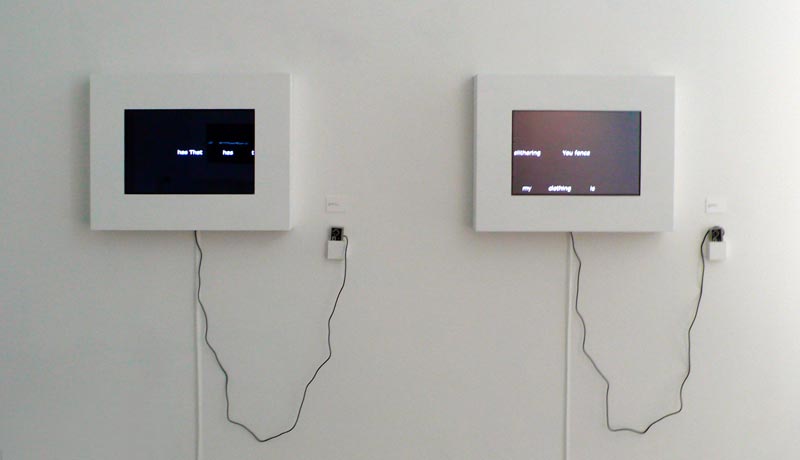
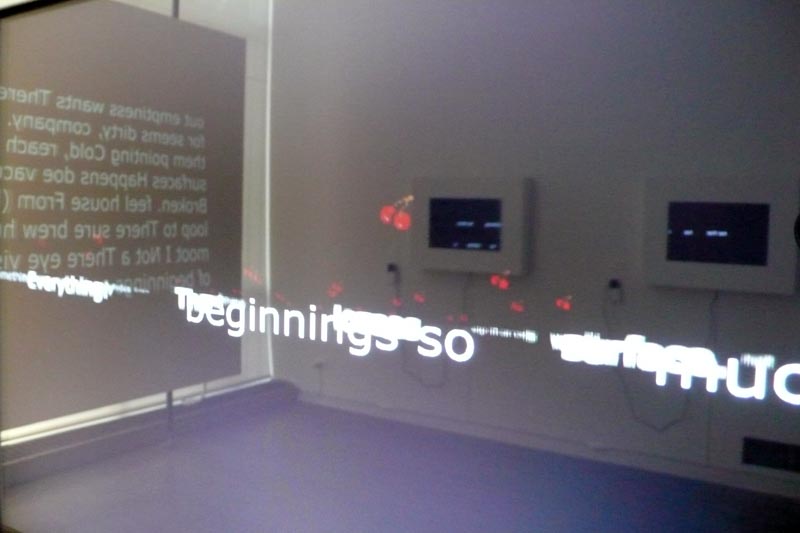
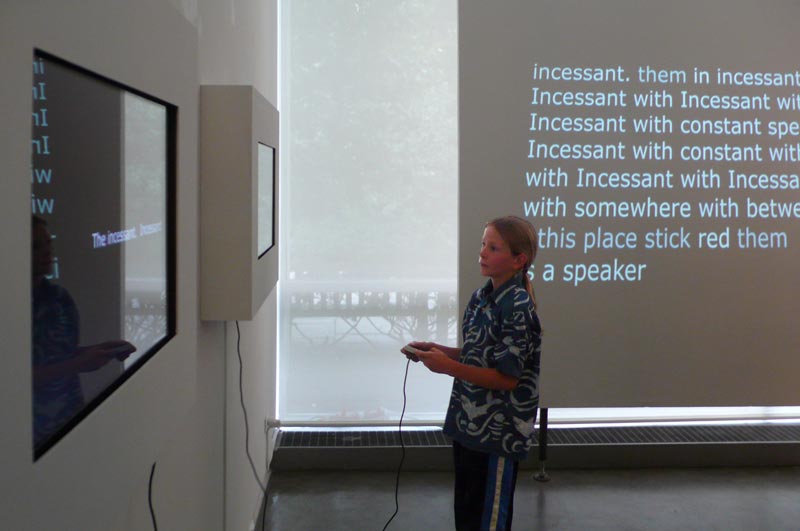
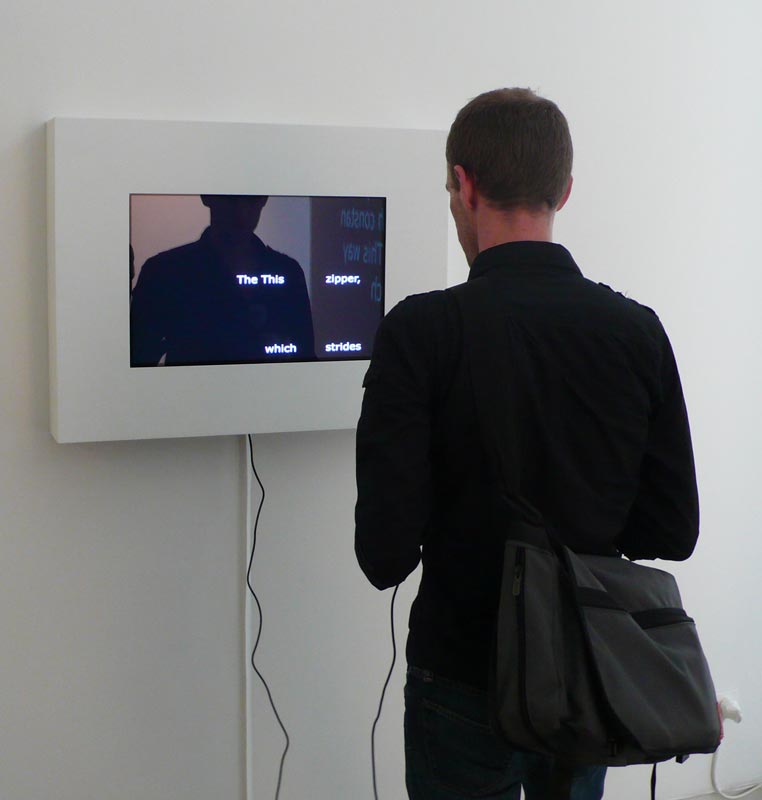
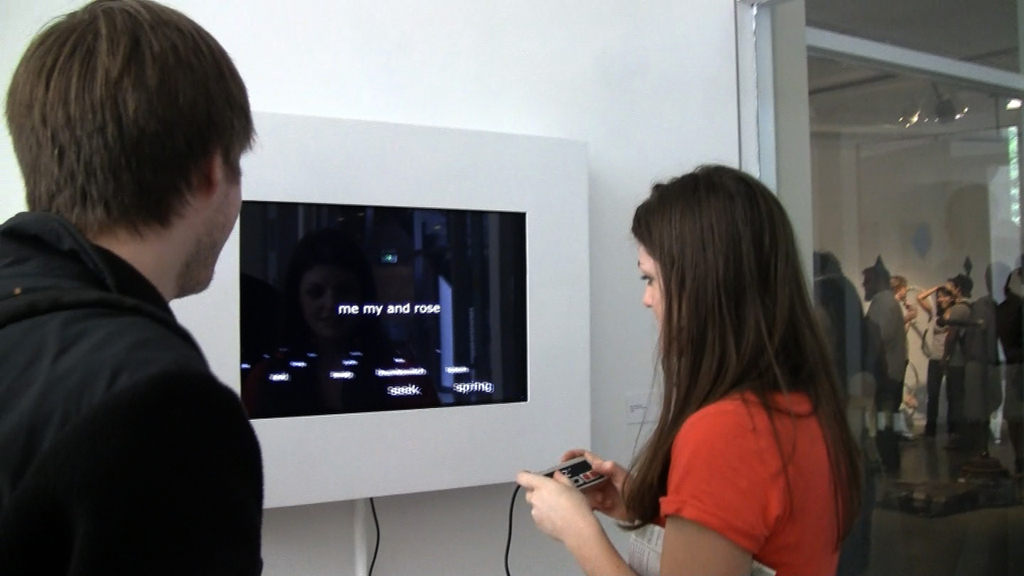
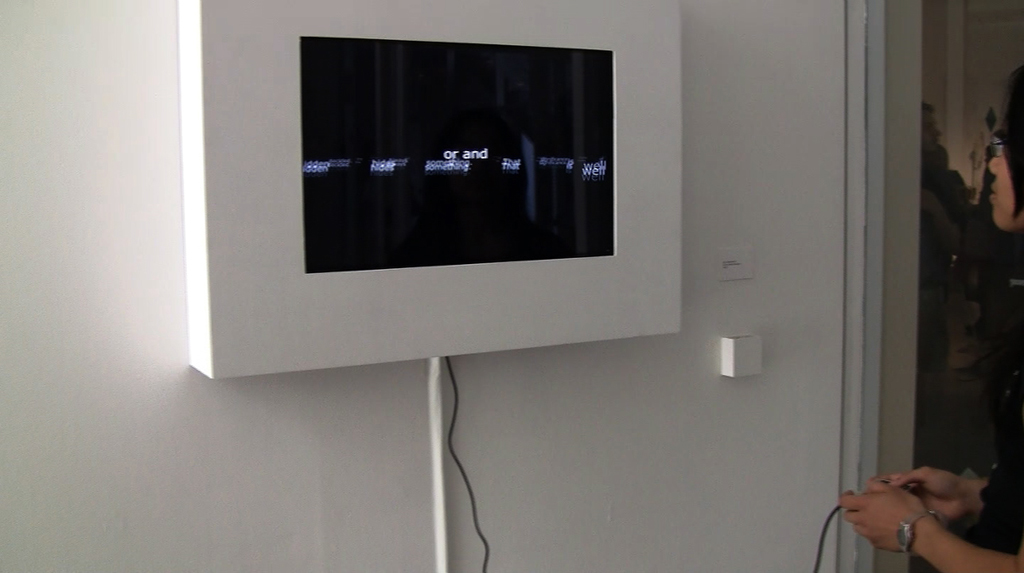
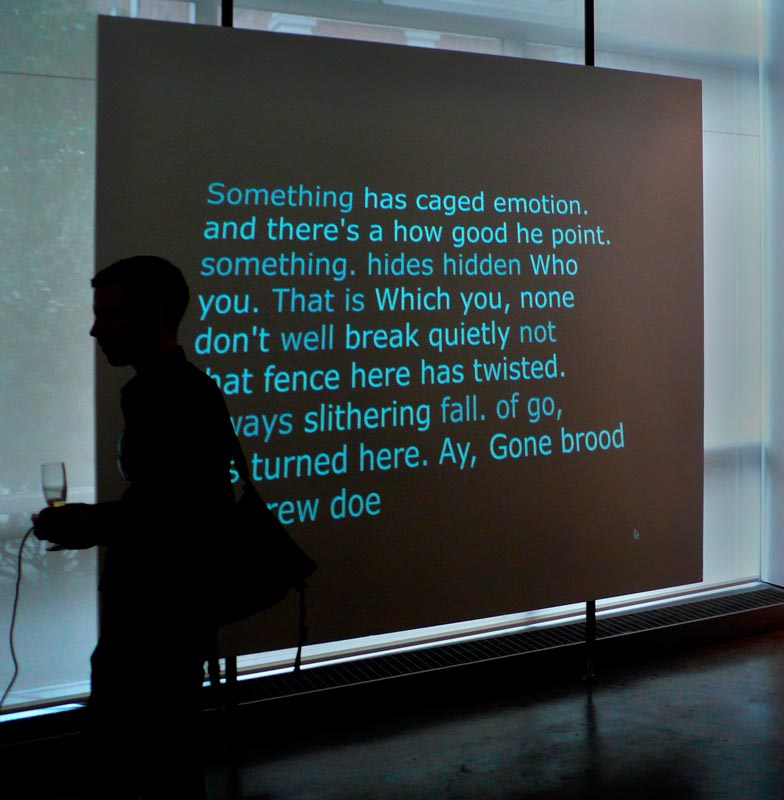
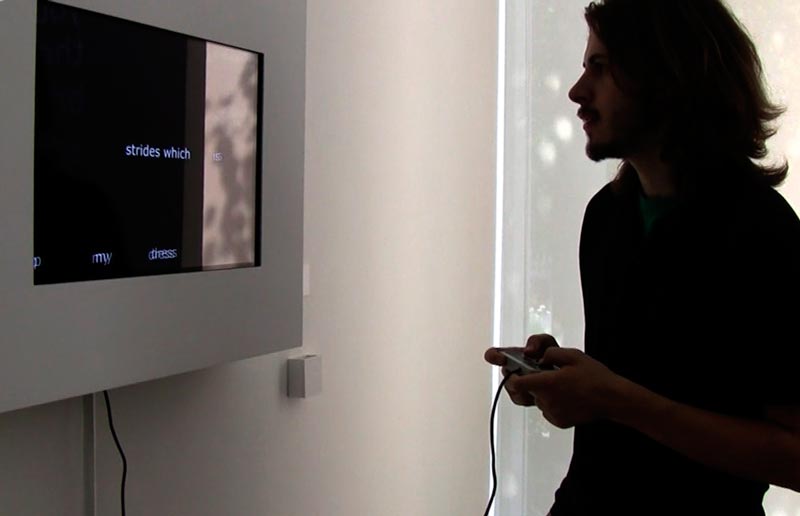
Three interactive game stations, video projection, game software with sound
Dimensions variable
2009
There is an ancient desire to expand poetry’s expressive potential by integrating visual elements and break free from a purely linear text. Shaped poems in Greek, Latin, Arabic, Hebrew, Chinese and Sanskrit suggest a common human urge to more closely model written language into a form related to its meaning. Even early 20th century modernists like artist/poet Apollinaire manipulated text to fashion a literary syntheses of space. If Apollinaire and his predecessors endeavored to mould pictorial strategies onto the demands of poetry, then Flanagan’s contemporary project [xyz] intends an analogous mapping—that of applying the rituals and structures of computer games onto – and into— a poetic system.
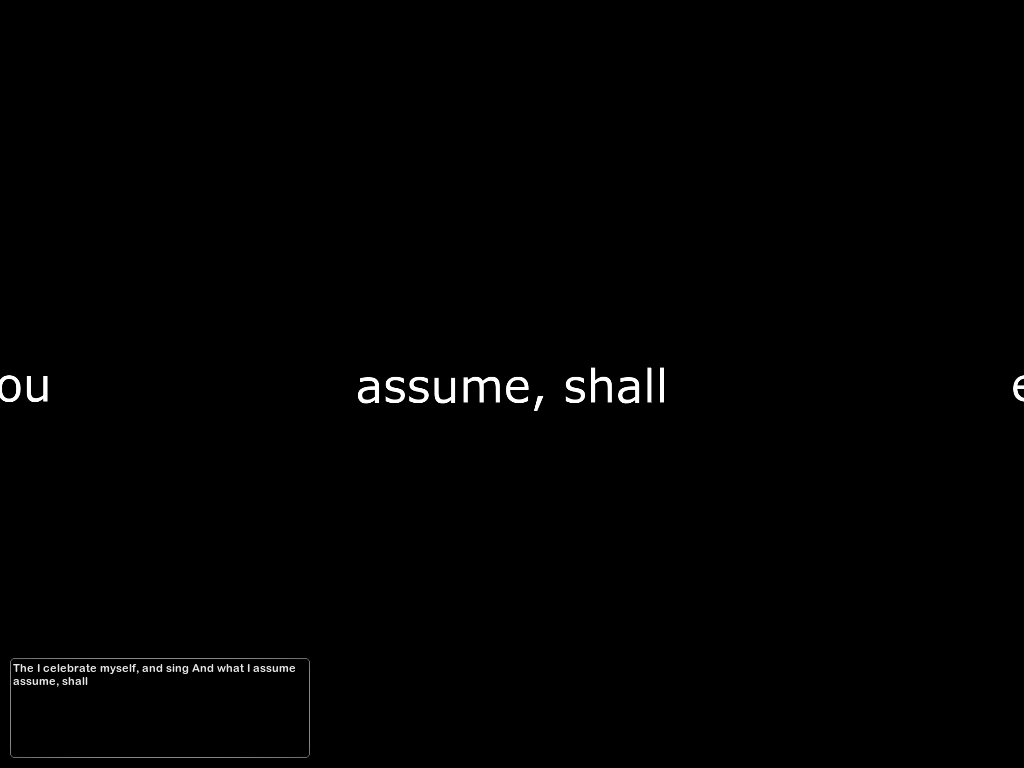
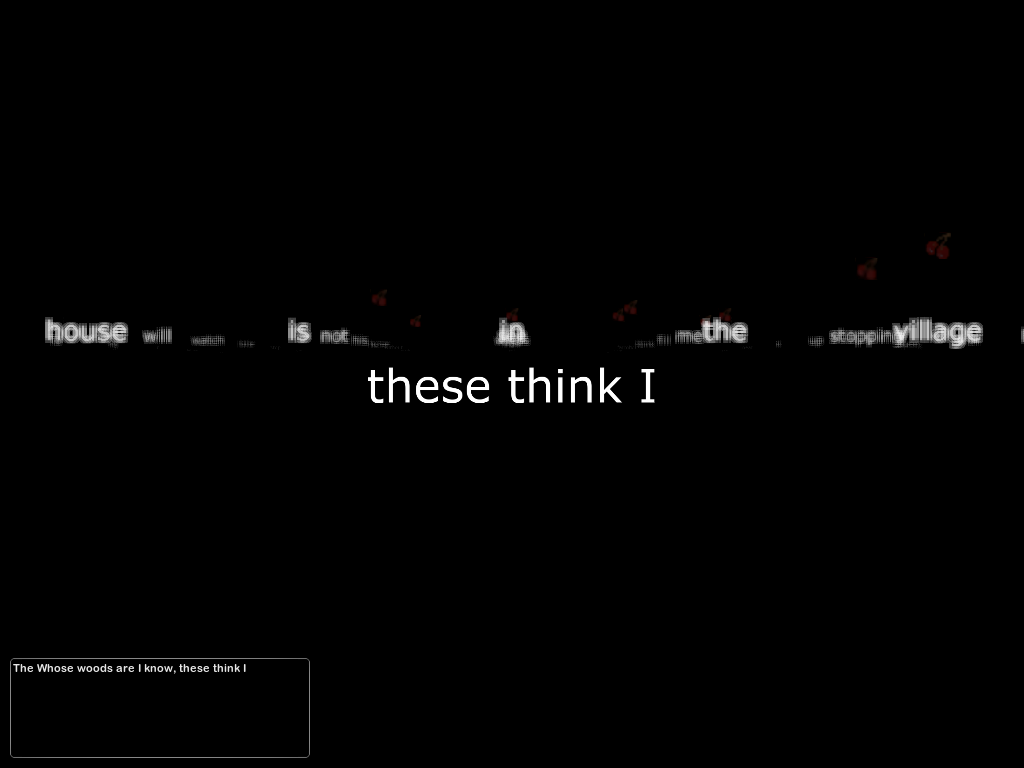
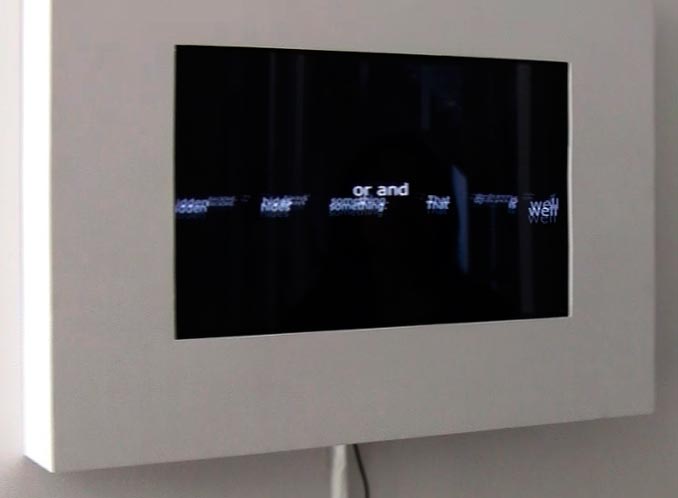
In [xyz] three independent player-readers reconstruct a three-part poem written by the artist. Player-readers interact by following the visual logic used by players of platform computer games. The rules of game play and the rules of language reside in the same location. Rather than collecting treasure or avoiding enemies, the player-reader instead collects, avoids and reshapes the text. Intermixing behaviors from both a writer’s editing process and the rituals of conventional game interaction, the text is continually in flux. Player-readers create dynamic combinations of new texts using the fundamental spacial system governing all computerized spaces, the Cartesian coordinate system of three independent axis lines: x, y and z. Participants interact with the words on the screen using a common game controller to collect sets of words. These sets are then sent to a larger projected image where the three player-readers’ choices are combined.
This 21st century variation functions as a concrete poem, a game, and as an exploration of spatial deixis, where the context surrounding a word or phrase is critical to understanding its meaning. Deixis is a phenomenon common to both literature and games and in [xyz] the player/reader’s experience of the ‘line’ as both text and space becomes a key point of reference, a center of the spatial understanding of each text.
Exhibitions
Solo Exhibitions
- Strauss Gallery, Dartmouth College, Hanover, New Hampshire, 2009
Additional Credits
- Game programming and network design by Jack Bowman
- Additional audio by Michelle Earhart